
I just spent two(ish) weeks walking through Japan. I wasn’t supposed to be there. It’s one of the best things I’ve ever done.
Suddenly
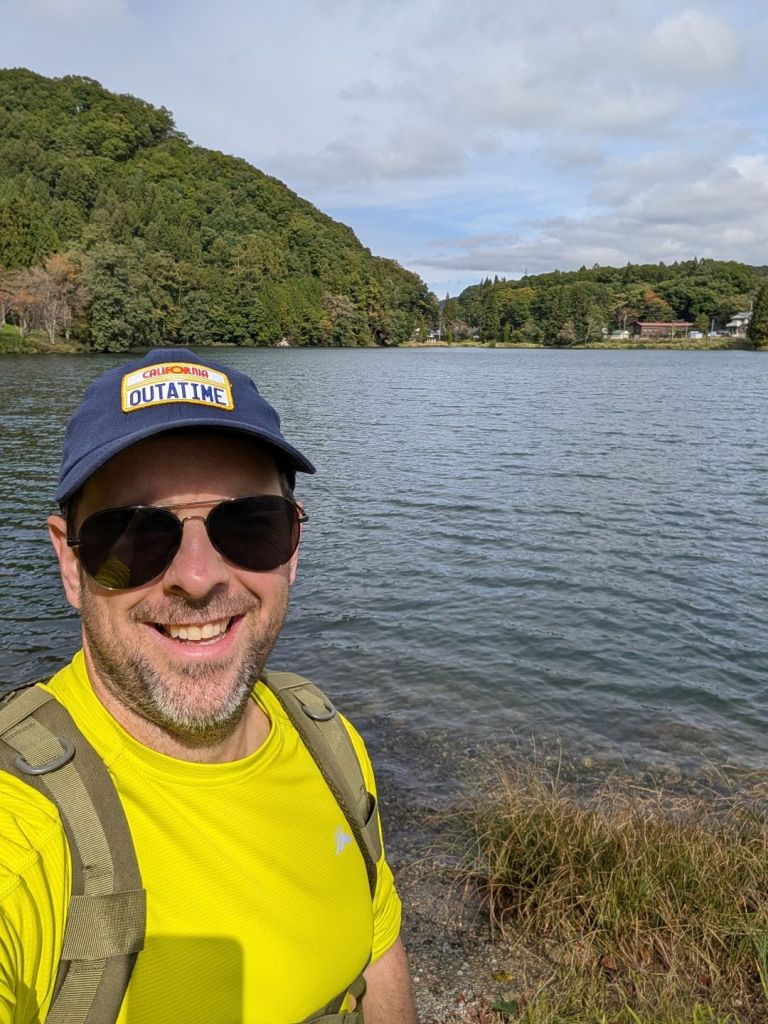
The short story is my mate Cam won a Guided By Nature tour and I got to go along.
The slightly longer version is he entered a 25 words or less competition for Get Lost Magazine, he wrote a “Hike-ku”, and he was rewarded with two tickets to a tour along the Shionomichi, Japan’s ancient Salt Road, a 120 kilometre trail stretching from Itoigawa, on the Sea of Japan, up to Matsumoto in the Japanese Alps.
The only catch? It was for a specific tour, on a specific date, and his partner was (is) at the sharp end of a degree and could not spend two(ish) weeks hiking in Japan.
So I got the call up.
How could I say no?
Who am I?
I didn’t really know what to expect, to be honest. I’ve done tours before, but nothing longer than a few hours. A walking tour of Osaka that I enjoyed quite a bit, a ghost tour of Sydney that I did not. I got an itinerary for our Shionomichi tour a month out, but… how do I put this delicately? If I’m not reading the tutorial prompts in a video game half the time, do you really think I’m gonna open a PDF?
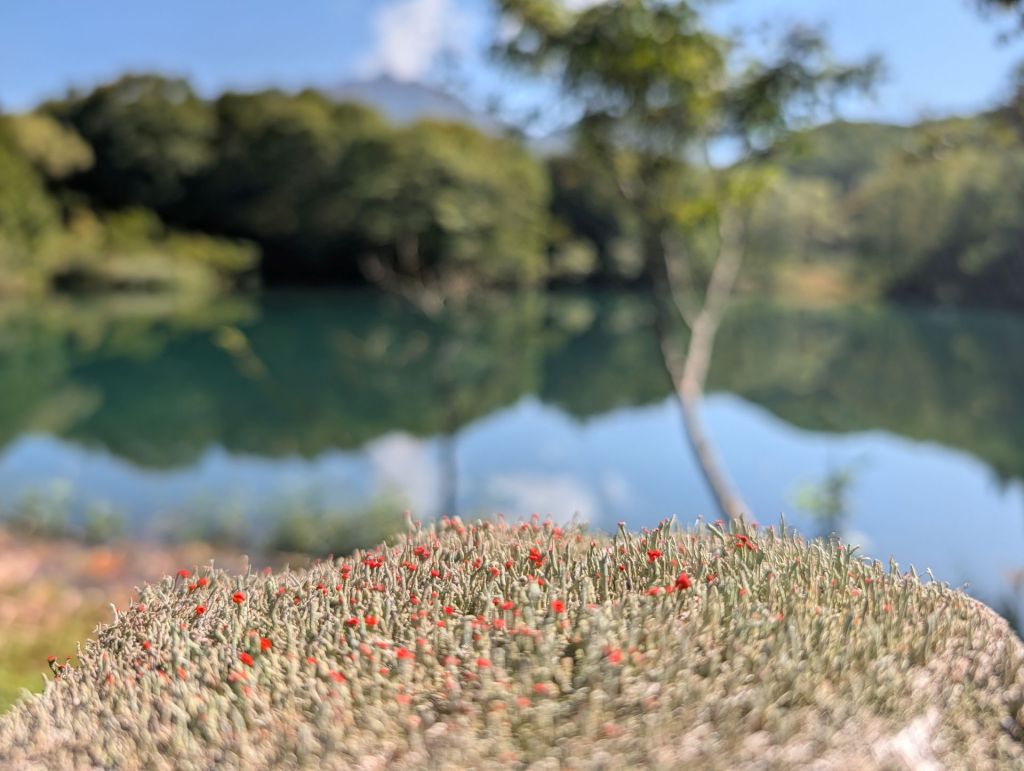
I was travelling with Cam, however, and he’s a bit of a planner. He read the details. He had ideas on what to expect. They were wrong, but he had ideas. He was thinking we’d be doing some hardcore walking and then stopping every now and then for some delicious food. A sake brewery here, a museum there, a bunch of hiking everywhere in between and then a Ryokan (Japanese hotel with an Onsen (a spa, basically)) every night.
He was correct about most of it, just the hiking wasn’t as hardcore as we’d expected.
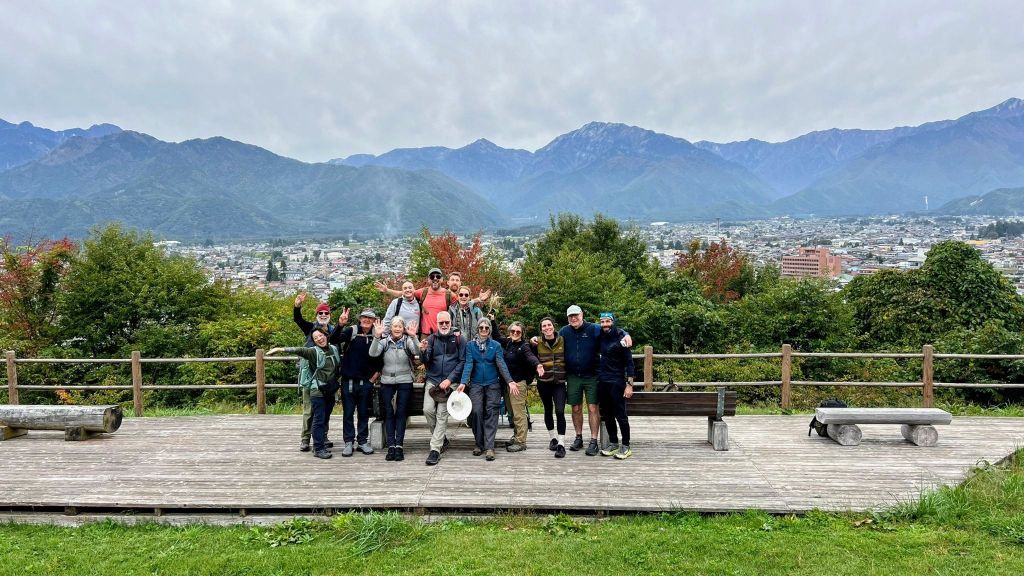
To me it was more like a school excursion. Our primary local guide, Paul-san, is a former teacher, and the way he delivered information was incredible. Everyone in our tour was inquisitive and intelligent, but I’d wager even the most stubborn-minded tourist would learn a thing or two from him.
And I can’t say enough nice things about the other people in the group. I shouldn’t have been there. Everyone knew it. I didn’t fit at all. Cam, at the very least, has a youtube channel where he hikes around Japan (well worth watching btw!). So as a competition winner for a ‘hiking tour in Japan’ at the very least he fit there.
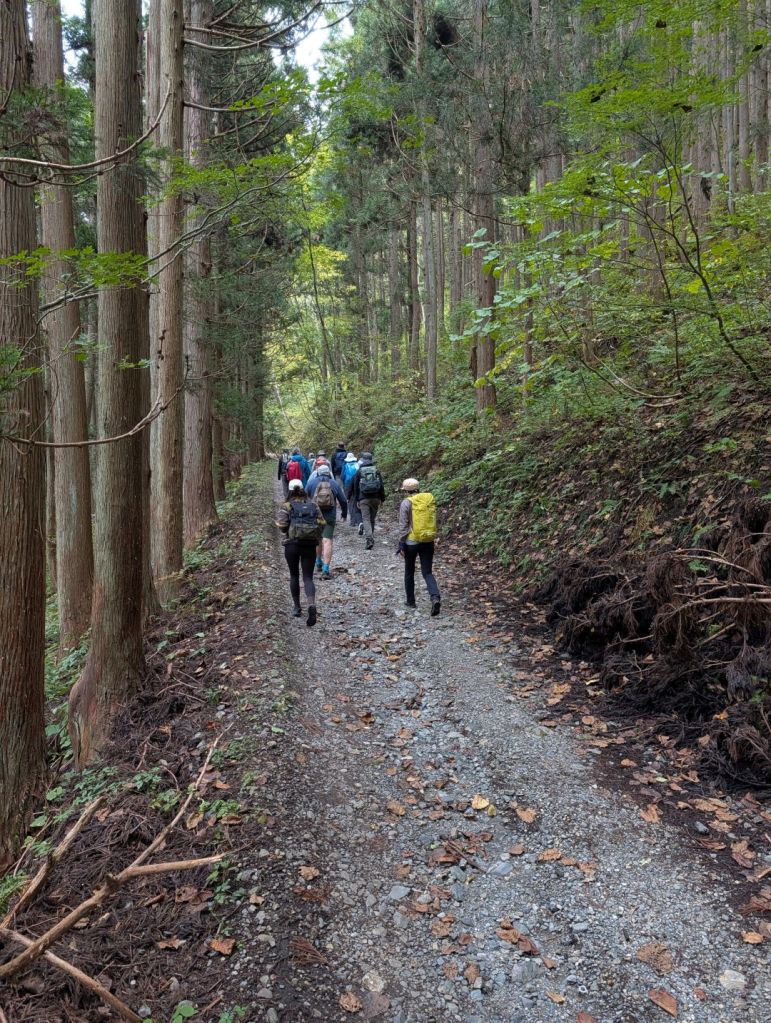
Everyone else in the group was older and rich. And in most cases, important. Doctors, Acclaimed Artists, Steel Magnates, a few people who may or may not have been spies (they got really cagey when I brought it up), everyone belonged. It was like there were three distinct groups. There were the experienced hikers (Cam, our local guides, one of the spies), there were the rich and important people (pretty much everyone else) and then there was ya boi Joabo. Not a hiker. Not rich and important. Not even a competition winner, or a competition winner’s first choice of plus one.
But everyone was rad anyway. They were just good people. They didn’t have to be, but they were. It did raise one concern, of course. They say there’s always one arsehole on any given tour group, and if you can’t work out who it is, it’s you.
What a way to find out I’m the arsehole.
Every day
So here were my highlights.
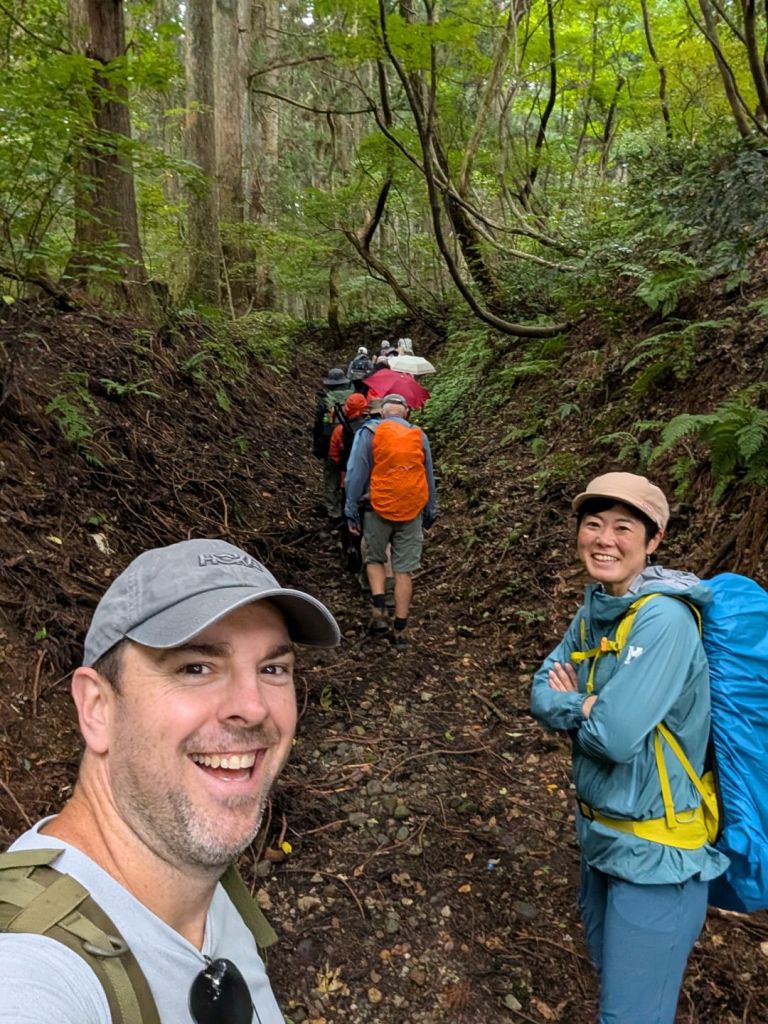
Overall, the feeling of comradery I got from my group was great. I really did think of us as a team, and it’s nice to be part of a team. I cannot express enough how much I enjoy being part of a team.
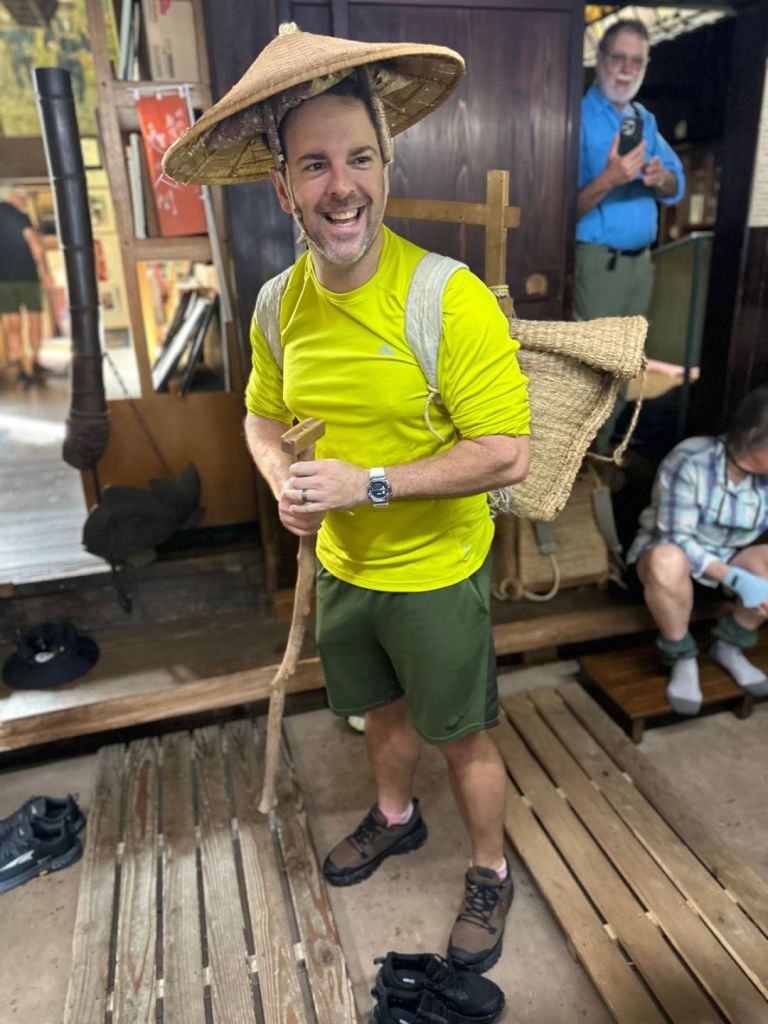
But that’s not a real highlight. We went to the Salt Trail Museum, where I chucked on the salt pack and posed for photos. It weighed 56kgs, and I reckon I could probably carry that bad boy the length of the trail. But that’s just a big old brag. The Museum itself was gorgeous, an old-school building with straw thatching and multiple levels littered with all manner of Bokka Porter paraphernalia, nestled in a valley we had to actually gain some real elevation while hiking to.
The various onsens where we stayed were incredible, but easily the best was on day two. It rained buckets that day, and kept raining until night time, and sitting half in the outdoor bath’s warmth and half in the drizzle was the most zen experience I’ve ever had.
All the food we ate was incredible, but the best meal I had was at a small Kominka (family-run restaurant) in Otari (I think). We built the fire to cook our own rice, I burned my table’s rice by building far too aggressive a fire (nobody told me what size fire to build, of course I built a big one) and the food was fantastic. It was rustic, tasty and it felt deeply communal. We learnt about Japanese traditions, we worked as a team, I ruined something and everyone was cool about it—it was a little microcosm of everything the tour was about.
Do you hear the people sing?
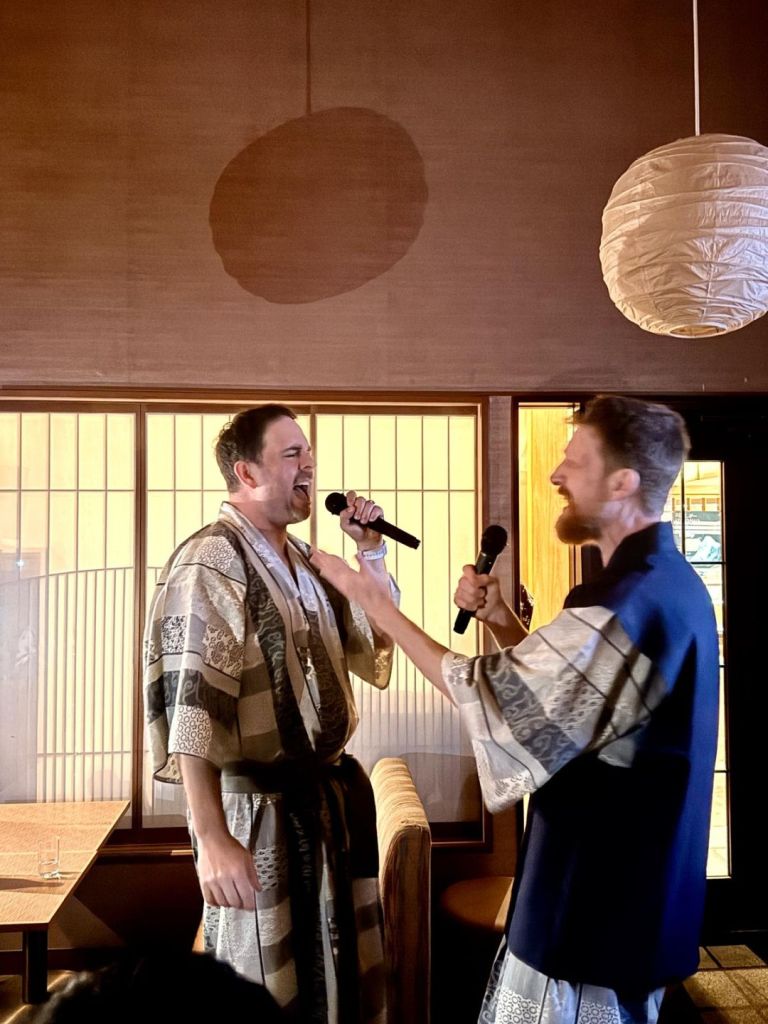
And finally the ancient Japanese art of Karaoke. When our local guide floated that karaoke was something he could arrange, not even the other local guide was up for it. But Mr Group Three (me) was all in. I love karaoke. Over the course of the day I managed to convince almost everyone to join in on the ‘oke, and it was a blast. People who swore they’d never do it sang and had fun.
Because here’s the secret to karaoke. Everyone wants to sing. People love singing. It’s joyous. And here’s another secret truth. Not many people enjoy singing alone.
Churches have been exploiting this for centuries. If you handed me a microphone and a sheet of paper that said “Psalms XX:X” on it and told me to sing it in front of everyone, I’d tell you to fuck all the way off. But if I’m in church and everyone else is singing it, eh, nobody’s gonna be able to hear that I clearly don’t know the tune, the words, the rhythm or anything else about what I’m doing. Every church hymn is the single most boring song since the last one, but people still love singing in church.
That’s the secret to karaoke. There’s always two microphones. You don’t just sing your songs, you sing everybody’s songs. Because karaoke isn’t “Regional Japanese Ryokan Karaoke Room’s Got Talent”. You’re not supposed to be good. You’re supposed to experience the joy of singing!
So you pick a song and you sing it with a lot of energy, and any hesitators can see that it’s just a pretty good time. Then, when they’re up to sing, you sing with them. It doesn’t matter if you don’t know the tune or the words or the rhythm; if anything, that’s better, because it makes the other person feel like they’re nailing it.
If I did anything for that tour group, I got them to do karaoke.
One day more
I’d not done a tour before, but I would do one again. It’s like VR to me, in the sense that I think it’s very difficult to sell a person on the concept unless they have experienced it. When someone ‘gets’ VR, they almost always become cult members—I could see myself becoming a tour cult member very quickly. I’ve already looked at other tours from the same company behind the Shionomichi tour, because I’ve evidently forgotten that I’m neither rich, important or a hiker.
It was melancholic, reaching the end of the tour and realising how much I was going to miss all my camp buddies. I couldn’t have been more different, more out of place, and yet they all embraced me by the end of our trip. On our last day, as we said goodbye to half our group (they had to leave early to get back to Tokyo for flights home), I felt quite sad as I hugged each of them (the embracing thing was literal).
I have trouble hugging people. I’m not afraid of intimacy, and I’m usually the one initiating a hug. Hugs are great. But one of the last things my dad said to me was “you can’t hug me so hard, Joab”. He was frail, hospitalised at the time, not the powerful man he’d been my entire life. Weakened by his body betraying him, his skin sagging from too-fast weight loss, his deep brown tan yellow-tinged. And I hugged him hard. I hugged him like it might be the last time I got to hug him. Like if I hugged him hard enough, I’d never have to let go.
And when I hugged my companions goodbye—most of them older than my dad was when he passed—I felt some of them flinch. I hugged too hard. I didn’t want to have to let go.
It wasn’t about them. I was living in a fantasy land. You go on these tours and everything is taken care of for you. You’ve got holiday brain, and you get used to waking up and being told each morning you’re going on a new educational adventure, but only after you’ve eaten so much food you’ll bulge, and when it ends you’ll have to go back to the real world where you don’t go on educational adventures every day.
So it was sad, saying goodbye to them. Because they were great, and because the tour was great.
But coming home was joyful. Is joyful! I get to write again! I had zero time to write on the tour, although I did take some notes on my phone. All my stuff is here too. Japan does not seem to believe in pillows or the tyranny of comfortable mattresses.
Most importantly, my wife is here. And I can never hug her too hard.
 Joabyjojo
Leave a comment