
Slay the Spire is one of my favourite games of all time. It’s a top 5 game, alongside the likes of Deus Ex, Grand Theft Auto: Vice City, Metal Gear Solid 3: Snake Eater and Elden Ring. Where it sits in that mix, I don’t know, but being in the Top 5 at all is no small achievement—I’ve played a lot of games.
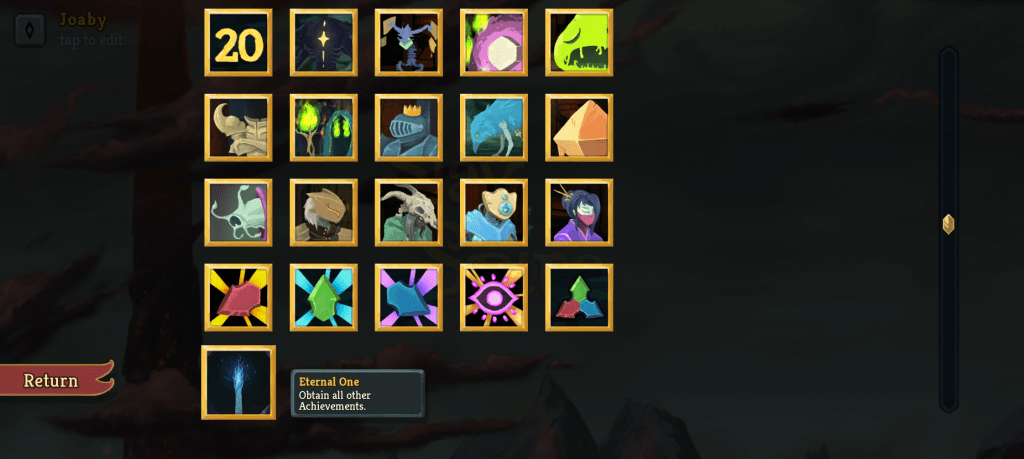
I finally finished it the other week. As in, I completed all the achievements, I beat the game on the hardest difficulty, placed first in the daily challenge… finished the game. I reached the top, and I had to stop, and that is what was bothering me.
So I shifted to a new game. Balatro was hailed by many as the successor to the Slay the Spire crown. And I needed a game to play on public transport. So I grabbed it and played it non-stop for a solid week.
I have since returned to Slay the Spire.
Balatro isn’t for me. It’s not like Slay the Spire outside of superficial similarities. And the specific way in which it is different is staggering (and in the title of this blog post).
Let’s talk similarities first. Both Balatro and Slay the Spire use cards as their primary interaction point. You draw cards, you play cards, and cards you play ostensibly determines the difference between victory and success.
That’s it. They’re otherwise different games. Slay the Spire is a deck-building roguelike where players use their knowledge of the game’s mechanics—cards, relics, enemies, events—to forge a path to victory.
Balatro is an economy management dice roller dressed up as a singleplayer poker game. It is a dice roll on a dopamine trigger, a slot machine you play for free (once you have purchased the game). There is skill involved, but the skill is in economy management—you want to maximise your money early so that you can reroll later. Or you want to be able to recognise quickly that a run has no chance of winning so you can start over in an efficient manner.
And that’s kind of a big deal. Because I can win at Balatro. I was playing it—forgive the hipster sentiment—long before it was cool. And long ago I realised that Balatro was a game where I realised I was winning, but I wasn’t beating anything. I wasn’t achieving the victory. Being in the right place at the right time does not register as success to me, even if I can recognise it as ‘winning’.
I went back to it recently because games can change. Monster Train, for example, underwhelmed me a little when it first entered its preview phase. I felt it relied too heavily on feast or famine mechanics, which meant that victory was more reliant on the lucky acquisition of a card than it was on my play. Post-launch, however, after extensive testing and feedback, Monster Train turned it around and became the sort of game I enjoyed.
Here is a highly scientific graph I whipped up to demonstrate what I mean.

As you can see, Luck still plays a role in Slay the Spire victories. That randomness (usually called variance in game design circles) is a key part of the game’s replayability. But more importantly, it can also lead to a player winning without actually achieving victory sometimes. You might start a run as Ironclad, high roll your way into a Strength build and then breeze through the game with very little effort. It’s definitely possible.
You’d be mistaken, I think, for thinking that means you can beat all of Slay the Spire this way. Meanwhile high level Balatro play involves quickly analysing the first shop to recognise you have zero chance at victory because you didn’t get lucky immediately.
All of this is to say, I guess, that if you describe Balatro as the successor to Slay the Spire I generally assume you are bad at Slay the Spire. Not that you’re a bad person, or any other judgment on you as a person, just that you don’t really understand Slay the Spire. And that’s fine. While it being one of my favourite games means it’s probably one of the best games of all time, it doesn’t mean it’s a game everyone will necessarily like.
Look I just want everyone to know I beat Slay the Spire, ok. Let me have this.
Anyway, onto other things! It looks like my podcast presentation of Till The Heavens Burst is working properly now, which is great! I’m stoked with how it’s going and I hope people are enjoying it! I am still in two minds as to how to present my next project. I’ve flip-flopped on it a billion times now. Weekly, like Blackbirded? Or all at once like Heavens/DNKJG? I just don’t know.
Weekly would achieve my primary goal of #creatingcontent, of putting something out for people every week. It’s in the name, really. But it’s a pretty hectic way to go about things. It’s kinda like building the rails while the train is already heading to the next station. And I worry that it would imply a degree of interactivity that I have no real interest in. I read up on the ongoing fiction scene and it appears the really successful efforts are almost collaborative efforts—the biggest fans often have a significant amount of input on where the story goes.
I don’t care for that at all. I already know the story I want to write. I want to share it with people, but I don’t want people to mistakenly believe they can alter the events within the story.
So releasing each story all at once would probably be better, right? But the trap of that line of thinking is the same as ever—I will wind up tinkering and tinkering and editing and altering and then I miss my deadlines.
That’s a false issue, though, because I know I am capable of calling it a day on a project. I’ve done it three times already! And about 10,000 times before that in reviews, features and news articles.
I could, of course, write the entire thing and then just publish it in dribs and drabs. I guess. Something about that feels weird. I dunno. I’ll work it out.
Anyway, none of this is really impacting the writing process, so the first book in the new series is coming along pretty well. And while you wait, I have written a brand new short story! It’s called “Better Tomorrow” and it is a time loop story.
Last month I talked about reviewing Citizen Sleeper 2 and Kingdom Come Deliverance 2, you can read those reviews whenever you like at the links below!
Citizen Sleeper 2: Starward Vector Review
Kingdom Come Deliverance II Review
I’ve been playing some excellent demos in Steam Next Fest. My standouts are Void War, Starless Abyss and Monster Train 2. I’ve also adored Echo Point Nova, more for its traversal than its combat (because I quickly optimised the fun out of the combat). As always, you can hear all about all of them and more on my podcast The GAPodcast.
 Joabyjojo
Leave a comment